
Lawn Maintenance
Weekly Lawn Mowing in Frederick, MD
Weekly mowing at 3 to 3.5 inches for Frederick tall fescue — with sharp blades, mechanical edging, and string trimming completed on every visit through the growing season.
Mowing with dull blades tears rather than cuts grass tips — leaving ragged, brown-tipped ends that create a gray appearance across the turf surface and increase susceptibility to disease through the frayed cut surface. We sharpen blades regularly so each visit produces a clean cut rather than a torn one. The difference is visible within a day on a Frederick fescue lawn.
Tall fescue growing at its normal rate in Frederick's spring and fall growth periods reaches approximately 5 inches within 7 to 10 days when maintained at 3.5 inches — which means a weekly mowing removes about 1.5 inches, staying comfortably within the one-third maximum removal rule. A biweekly mowing during the same growth period allows the grass to reach 6 to 7 inches, requiring removal of 3 to 3.5 inches — 60 to 70 percent of the blade — in a single cut.
A weekly-mowed Frederick lawn generates fine clippings that decompose and return nitrogen to the turf when distributed across the surface. We discharge away from beds, driveways, and low areas to prevent clipping accumulation in those zones. When growth has been faster than normal before a visit, clipping volume increases enough to require redistribution with the mower or collection to prevent matting.
Weekly Mowing in Frederick
The Technique Behind a Well-Mowed Frederick Lawn
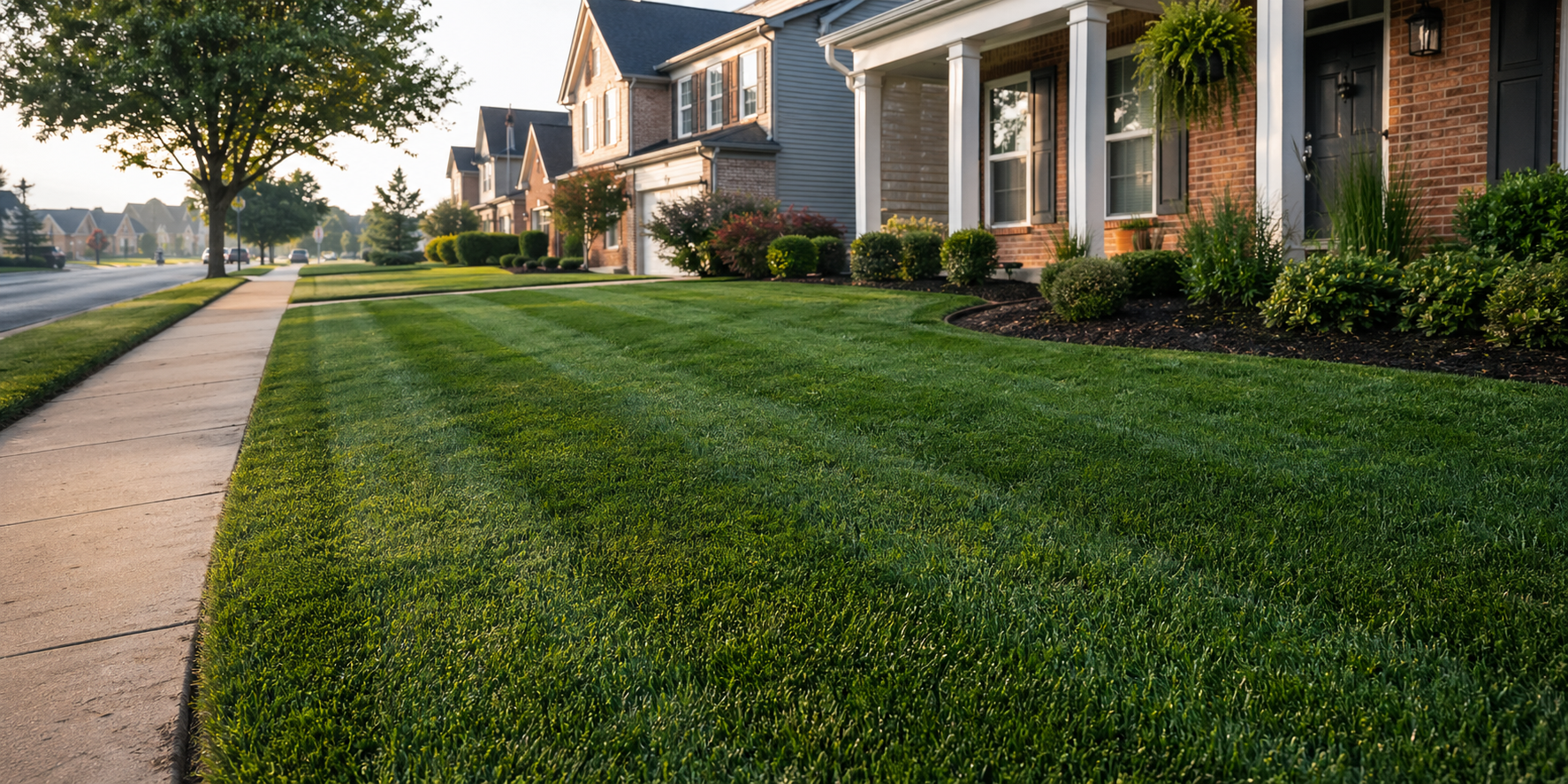
Weekly mowing on a Frederick lawn is a managed process, not just running equipment over grass. The mowing height is set before the first cut of the season based on the grass type and current condition. Blade sharpness is checked and maintained because dull blades undermine the visual result of every visit regardless of frequency. Discharge direction is considered for each pass to keep clippings off hardscape and beds. Mowing pattern is varied between visits when the property allows it, to prevent soil compaction channels from developing along repeated tractor paths. Edge lines and trimming follow the mow on every visit. The accumulated effect of doing all of these correctly on a weekly schedule is a Frederick lawn that looks genuinely maintained — not just cut.
Mowing Height and the Frederick Growing Season
The 3 to 3.5 inch mowing height for Frederick tall fescue is not arbitrary — it is the range where the canopy is dense enough to shade out weed germination and cool the soil surface during summer heat, while staying low enough that the one-third rule is met on a reasonable 7-day interval during peak growth. During summer dormancy-adjacent periods in July and August, we raise the height slightly to reduce heat stress on the turf during periods when it is growing more slowly. This means the deck height setting may change three or four times over the season as growth patterns shift — we manage that rather than running the same height year-round.
Mowing Pattern Variation
Running the mower in the same direction every week creates wheel compaction channels and grass lean patterns over time. Alternating the mowing pattern between visits — north-south one week, east-west or diagonal the next — distributes the compaction load and produces a more uniform stand without lean marks.
When to Skip a Visit
During dry summer stretches in Frederick when fescue growth stalls, running a weekly mowing visit on grass that has barely grown in 7 days causes unnecessary wear on the turf surface. We flag slow-growth periods and adjust visit timing rather than running unnecessary visits that provide no benefit and add stress to dormancy-adjacent turf.
Weekly Mowing Visit Structure
Property Walk
Check for debris, new obstacles, and growth rate before starting to set the right approach for this visit.
Mow at Set Height
Full mow at the current seasonal height setting, varying pattern from prior visit when property allows.
Edge and Trim
Mechanical edge along all hardscape lines, string trim around all obstacles — completed every visit.
Blow Out
Clippings and debris blown off all hardscape before leaving the property.
Spring Startup
First mowing visits in April are often at a lower deck height than summer to clean up the overwintered turf before transitioning to the maintained height. We assess condition on the first visit rather than applying the standard height immediately.
Summer Height Adjustment
July and August: raise deck to 4 inches to reduce heat stress. The higher cut leaves more leaf surface for photosynthesis during the heat-stress period without the added overhead of excessive top growth.
Fall Frequency
September growth rate on Frederick fescue often exceeds spring rates — the cooler temperatures and recovery from summer heat produce fast new growth. Weekly service through September and October is usually the minimum to stay within the one-third rule.
End of Season
Final mowing visit timed before the first hard frost — typically late October to mid-November depending on the season. We mow slightly lower on the last visit to reduce the risk of fungal issues in the compressed winter turf mat.
Schedule Weekly Mowing for Your Frederick Property
Contact us to check availability for your area of Frederick before the spring season fills.
Request An EstimateHow short should I mow tall fescue in Frederick?
No shorter than 3 inches — ideally 3 to 3.5 inches maintained through the season. Shorter mowing stresses tall fescue in Frederick's summer heat and reduces canopy density that suppresses weed germination. We raise the deck to 4 inches in July and August to reduce heat stress.
Should I bag or discharge grass clippings?
Discharge on weekly-mowed Frederick lawns. Fine clippings from a properly timed weekly mow decompose within a few days and return nitrogen to the soil. Bagging removes this benefit. We collect only when clipping volume is high enough to create surface mats — not as a default on every visit.
Does the mowing pattern matter?
Yes. Mowing in the same direction every visit creates compaction channels from repeated wheel paths and causes grass blades to lean in one direction. We alternate the mowing pattern between visits when the property configuration allows it.
Biweekly Lawn Mowing
Biweekly mowing for Frederick properties where a two-week interval is appropriate for growth rate and budget.
Lawn Edging and Trimming
Mechanical edging and string trimming — included with every mowing visit.
Core Aeration
Fall aeration to relieve compaction that accumulates on Frederick lawns under regular mowing traffic.